
by Ellie Kravets, Friends of the Anacortes Community Forest Lands for Fidalgo Living, February 2026 Edition
For many of us, spring may still seem a distant blip on the horizon, but careful forest-goers might notice our four-legged amphibian friends hopping (and crawling) to it! This season of not-quite-winter and not-quite-spring is the perfect setting for many of our local frogs and salamanders to gather and kickstart the next generation.
The theory? Lay eggs now - before the leaves fully emerge - when the sun will gently warm the water and hasten the young eggs’ development. By the time tadpoles and larval salamanders emerge, new leaves will give young amphibians plenty of places to hide from predators (or stalk aquatic insects themselves!) For some, getting this timing right is even more critical: eggs must be laid, mature, and larvae must metamorphose before the summer drought sets in and their seasonal wetland dries up for the year.
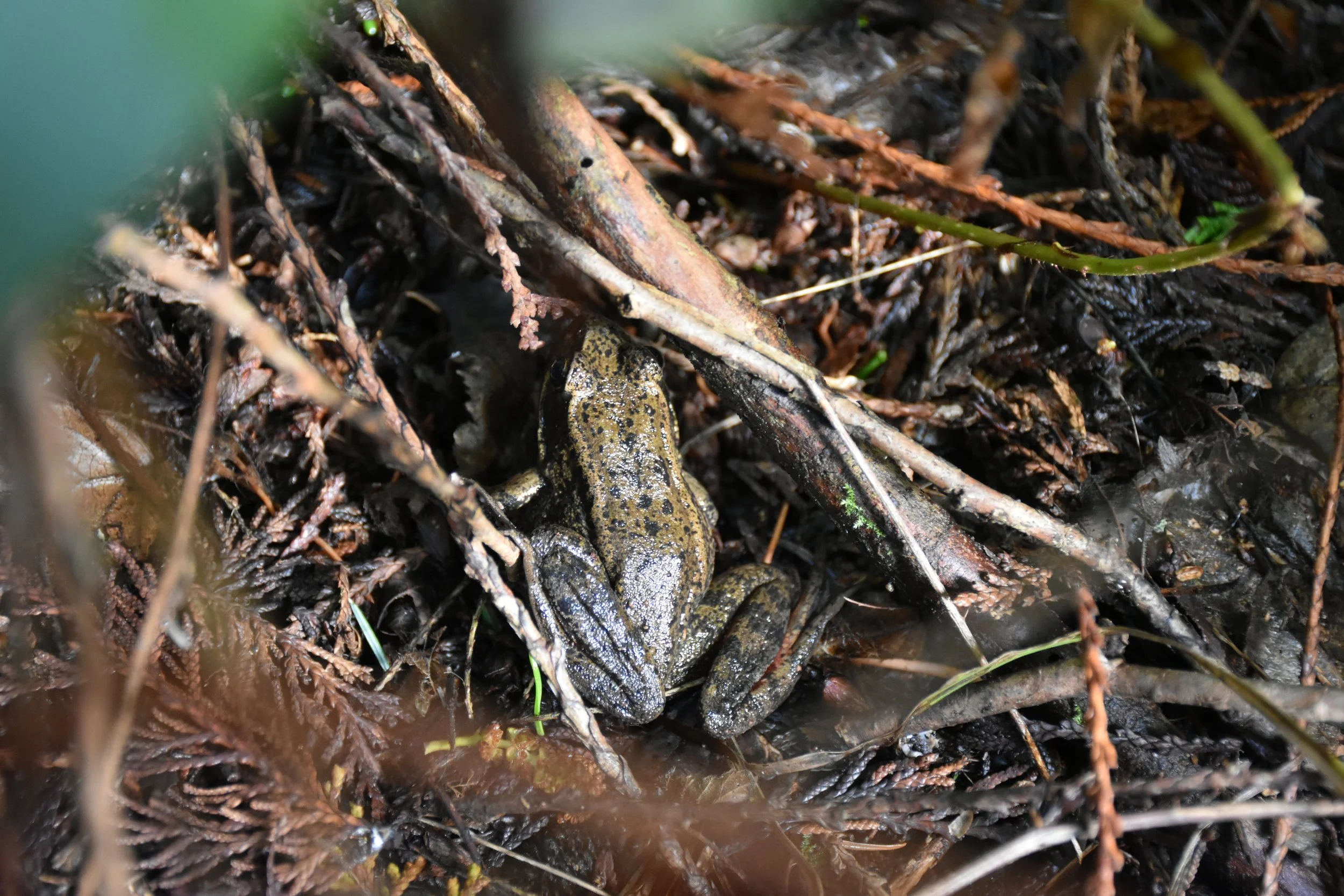
For the humans among us, the quiet days of late winter are spectacular times to practice your frog-spotting. Bundle up in your best weather gear, prepare to ford some mud puddles, and head out to the trails! In the wet forest, you will hear the loud krek-ek of the Pacific chorus frog: the only native frogs you are likely to hear from a distance in the ACFL. For a challenge, try lingering quietly on a trail along a small pond or ditch: you might just hear the quiet uh-uh-uhs of Northern red-legged frogs, too.
Next, you might try looking for eggs in the sheltered waters of our fish-less wetlands. Beaver ponds, trailside ditches, and any other depressional wetland are ideal places to spot some spawn. All amphibian eggs will look a little like passionfruit pulp: small, black eggs surrounded by a protective jelly coating.
Along our trails, you are most likely to spot the eggs of the Northern red-legged frog or the Northwestern salamander: for the salamander, look for grapefruit-sized, round balls deposited around a sturdy twig just under the water’s surface. You won’t be able to distinguish individual eggs easily, as salamanders deposit a second layer of protective jelly around the egg mass to keep the whole blob together. For the frog, look for a softer mass, with distinguishable individual eggs about the size of grapes floating near shoreline vegetation. Be sure to stay on trail and view egg masses from a distance to give the developing eggs the best chance at survival.
This season of the frogs is a special time of year, but we can do our part to make sure local amphibians stay safe throughout this vulnerable period. Be aware that trails may become pathways for traveling frogs, newts, and salamanders, and take extra care to avoid trampling them. Off-leash and off-trail dogs are always a concern in the forest lands, but especially so right now: a single dog exploring the water’s edge could easily destroy an egg mass containing hundreds of eggs! Curious pups can also get into more immediate trouble if they encounter a native rough-skinned newt, which secrete toxic compounds through their skin.
For some guided practice identifying amphibians this February, join us! Friends of the ACFL hosts free, open-to-the public guided hike programs throughout frog season. Find out more at www.friendsoftheacfl.org/upcomingactivities.